While many different elements go into setting up a special education classroom, these 5 areas should be a priority when you are setting up. Read on to find out which 5 areas will help your classroom run effectively and smoothly.
Physical Layout
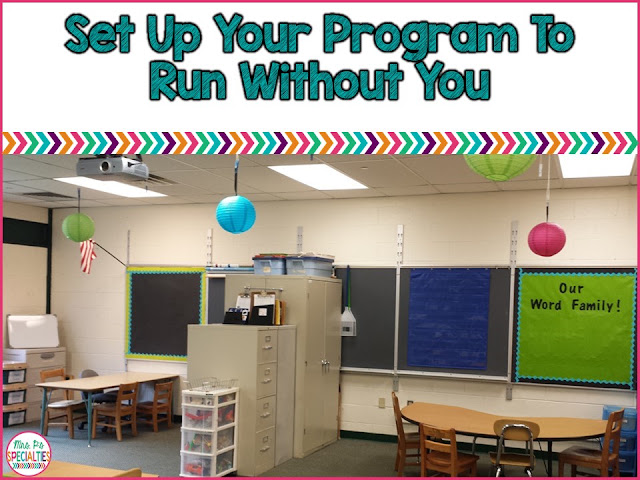
The first thing to focus on is the physical set-up of the classroom. Consider these 3 things when figuring out the physical layout:
1. The flow of the day… Do you want students to go from center to center? Then make sure that the furniture is arranged in a way that makes that easy to do. For example, each rotation moves clockwise. This will make student transitions smoother.
2. Arrange furniture so that you can see students easily. For example, don’t have students working alone at a table behind a tall divider or bookshelf. Instead, use a shorter bookshelf to give the area a boundary without interfering with the line of sight.
3. What areas of the classroom will be distracting for students? Plan for a way to prevent distractions before they happen. For example, have students seated with their backs to the computer center or window to the playground. Many students like seeing their reflections in screens, mirrors, windows, etc. If you can’t set up seating so students can’t see them, then cover the items with solid paper or fabric.
Click the picture below to read more tips for setting up the physical space:
Training Staff
You won’t have any time to teach if you don’t create and train your staff on the different systems in your classroom. If you have ALL the answers to everyone’s questions, then you are going to be interrupted ALL day long to help them. Instead,
set up your classroom to run as if you won’t be there.
Click the picture below for tips on how to avoid being interrupted while teaching.
Visual Supports
Study your students’ IEPs before working on this element. Use the PLEPs and modifications sections of the IEPs to determine which visual supports your students need to be successful in school. Next, think about how and where to add those visual supports.
Visual supports aren’t just for students! Be sure to use visual supports for the staff in your classroom. Click the picture below for more details on adding visual supports for paras:
Specialized Curriculum
Sadly, many special education teachers don’t have access to curriculum that is designed for students with disabilities. If that is true for your classroom, you are going to need to have a plan in place for supplementing the curriculum to give your students the supports they will need in order to truly learn the material. Think about what visual supports they will need… do they need hands-on tasks, do they need opportunities for a lot of review and targeted generalization?
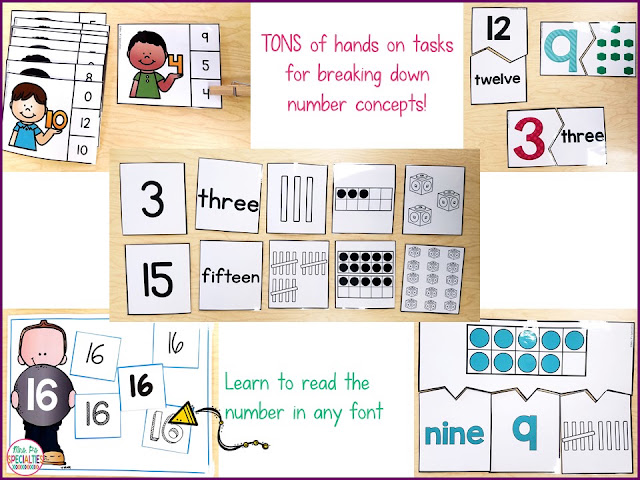
My students needed more visuals to break down abstract concepts in a way that they could understand. They need larger skills broken down into small segments. They need LOTS of hands-on practice in order to master and generalize their skills. Knowing all of this, I had to find a way to adapt the curriculum I was given to support my students. Here are some examples of how we do it… Click the pictures for more details.
It is very challenging for my kiddos to learn and generalize
number concepts, so here are some ways we adapt the curriculum:
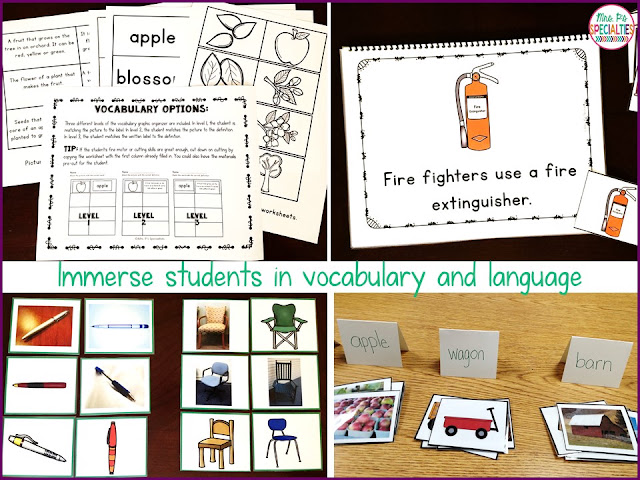
My kiddos need to be immersed in vocabulary in order to really understand the words, so here are some of the
theme unit activities that we do to support their understanding:
My kiddos need vocabulary explained and concepts taught to them step by step like in the picture below. The math support is from the
Subtraction Unit and the interactive book is from the
Scientific Tools unit.
Age Appropriate Materials/Setting
When gathering reinforcers, visuals and instructional materials, keep in mind the age of your students. We are tasked with finding items for our classrooms that meet the developmental needs of our students while being somewhat age appropriate. For example, if you teach high school, you wouldn’t choose a resource highlighting Dora The Explorer even if the skill level is correct.
I hope these tips have helped you get a clearer picture in your mind of how you want to set-up your classroom.